Pages

Sunday, February 3, 2013

Resisting Western Exceptionalism


           Just before he is murdered Enishte Effendi raises some important questions: what is immortality worth, and why must the miniaturists succumb to the Frankish style (i.e. western dominance) to become immortal? Enishte admits that “to have one’s face immortalized is through the Frankish style” (170). He goes on to lament the fact that their methods will essentially cease to exist thanks to the alluring Frankish style people seem to be so enthralled by. And even if the miniaturists do dare to imitate the Franks—risking their lives in the process for the sake of perhaps attaining immortality—their works will ultimately fade away.
            Fast forward about 400 years and we see a familiar picture being painted: Western domination and exceptionalism. Enishte asks his murderer, “In this city, where every three years more books and libraries disappear than those the Mongols burned and plundered in Baghdad, what painter could possibly imagine that his masterpiece might last more than a century…?” (171). Except today it is not the Mongols burning and plundering Bagdad, it is the U.S. burning and plundering Bagdad under the guise of democracy. Nothing was done in the aftermath of invading Iraq to protect its masterpieces, fine art, and artifacts held in the museums and galleries; not only were their lives destroyed, but their culture as well.
            While Enishte Effendi’s Istanbul was not currently being physically destroyed by Western forces, Western exceptionalism was taking its toll on his culture. He explains, “Not only our own art, but every single work made in this world over the years will vanish in fires, be destroyed by worms or be lost out of neglect…” (171). Enishte continues to lament—for an entire page—all the stories that will be lost thanks to the notion that the Frankish style should be more revered than his own. He and the others working on the book for the Sultan risk their lives—and more importantly their own culture—to imitate the Frankish style in hopes of achieving a sort of immortality seemingly only achieved by those depicted (and perhaps painting) in that style. What is this immortality worth to these men? They are obviously not only willing to risk their lives, for Enishte Effendi feels his death is inevitable, but their humanity and, sadly, their culture as well. Or is Western exceptionalism so unavoidable that they feel they have no choice but to succumb to its tyrannical influence and might as well risk their lives in hopes of achieving their own personal immortality? And though My Name is Red’s existence is somewhat immortalizing this style and these stories itself, it seems greater actions must take place to combat the notion of Western exceptionalism that seems to plague the past, present, and future. 

Murder Comparisons


            Elegant Effendi and Enishte are both, of course, murdered. While some aspects of the events are similar, there are very different emotions between Elegant and Enishte, especially their perspectives and thoughts after their death. Elegant’s murder is literally the very beginning of the book, while Enishte lives and thrives until approximately halfway through the novel.
            Both Elegant and Enishte are murdered with blunt objects, a rock and an inkpot respectively. Each victim is also caught alone and left for dead. However, Elegant was lured away from civilization and put into a predicament of which he could not get out. Enishte’s murder is premeditated, but the killer could not be sure that he would see Enishte alone; the murderer took the lack of obstacles as a sign from Allah that he was doing the right thing.
            Enishte tried his absolute hardest to hold on, to stay alive, until he could see his daughter Shekure one more time. When he realized he had no choice but to give in to the brutal beating and the pain that followed, Enishte lamented that he thought he would “die of misery,” since he would not see Shekure (175). On the other hand, Elegant Effendi talks about the great relief he felt when he realized he would die. Physically, he was in great pain and torment, but mentally the primary emotion he speaks of is the relief of going to the other side as he died. The contrast between the Elegant and Enishte may speak to the level of religious connection; Elegant talks more of “gently,” passing over, while Enishte tries to stall the process. Once Enishte has completely passed over, he is more content and relaxed.
            At the end of the first chapter, Elegant Effendi wants nothing more than to find his murderer and hopes that when he is found, he will be tortured. However, Enishte recounts the events of his funeral, and how pleased he is. He explains that essentially, he is in a better place and is not concentrating on finding his murderer, because he is preoccupied with better, more fulfilling things where he is.

The Human Killer


            The novel My Name is Red begins with the murder of the Elegant Effendi and the ensuing action revolves around finding his killer.  While his original belief is that his killer committed the murder because of their jealousy of his talent as a miniaturist, we find out later that it is because of the corruption the killer feels that the Elegant Effendi is involved in because of the book he is making for the Sultan. By the second half of the novel, we know that the killer is one of three people, who are all very skilled miniaturists who go by the monikers “Butterfly”, “Olive”, and “Stork”. Through the organization of the narratives of the three characters as well as the use of their personalities as major elements of the human psyche, the novel presents these three characters as one main entity.
            The narratives of the characters of “Butterfly”, “Olive”, and “Stork” are always shown in succession of each other.  This is not the case for any other grouping of characters which suggests that the three of them should be linked together.  Obviously they are quite similar, all work in the same elite profession and are well loved by Master Osman. But most importantly is that they are all suspects in the murder of the Elegant Effendi. It is because of this mystery that they are all compared so closely and made to seem so similar. The emphasis placed on the three of them as a group is larger than even the father/daughter relationship or the relationship between Shekure and Black.
            In addition to being closely linked, these three characters act as foils in that they serve as both individual characters, and the thing to which the others are compared. However, instead of merely reflecting the attributes of the others, the foil relationship points out how the three of them are not separate, but instead comprise one larger being. 
            In the section written by Master Osman, he explains the attributes of each character. He describes each as having different passions and talents. Olive is described as having an intense creative drive, so much so that it encompasses the rest of his life and all he does is his artwork. This can be linked to Freud’s conception of the Id, which is the subconscious drive of humans. “Butterfly” is described by Osman as needing constant validation from others, which can be seen as a correlation with Freud’s Ego (which is our conscious rationality). Finally, “Stork” is described as being merely “himself”. In his own narrative he explains that “When I draw a magnificent horse, I am who I am, nothing more” (279). Besides the obvious allusion to the bible, this can be seen as the Superego, or the bridge between the ego and the Id. Together, these three comprise what Sigmund Freud thought to be the levels of our consciousness—that which describes our selves. Since no one exists without all three, the focus on finding the “one” who did it is not important. Instead what is important is noticing that in each of us needs to be a balance.

Hayrire's love vs. Shekure's

           When Enishte Effendi died, Shekure had only selfish feelings.  She was worried that her brother in law would hear about his death and take advantage of the situation.  Some would say that her worry was for her sons, but Hasan would be as good of a father, in her current knowledge, as Black.  So her real worry was only for herself.  Hayriye, on the other hand, was truly emotionally affected by his death.  She might even have felt love for him.  He was the master of the house, and she was his servant, and that might be the only reason they were sleeping together, but I don't think it would be fair to negate her feelings.  She is suspicious of Shekure because it is clear that she has always been vain and selfish.  The reader is not suspicious of Shekure, we are there in the house of the hanged Jew with Black, but if we were able to see from Hayriye's perspective, Shekure and Black look very suspicious.  It seems like the death of Enishte Effendi benefits them the most.
          Hayriye's opinions would have been valued in many other places as well.  If she could comment as Esther does, we could gain an insight to the household.  On page 207, Hayriye is taking care of the children and guiding them away from their dead grandfather.  They do not understand what is happening, but she stays strong and keeps her wits.  This isn't the first time she proves to be a stronger personality than Shekure.  Upon first viewing the body, she is moved emotionally but does not break down.  Shekure constantly reminds the reader that she was devastated, but since she has to defend herself it brings a lack of reality.  Hayriye's loss can be felt even in other people's description of her.

Suicide and Blindness, or a Jealous Demand


            Sealed into his Sultan’s Treasury, Master Osman pierces each retina with the late Master Bihzad’s own “golden plume” blinding needle. Waxing woeful, he imagines the “painters…who suffered for their art…before succumbing to anonymity and blindness after long years of toil” (315). Osman’s lament for his name and his forbearers (and in a way, successors) is a surprisingly bourgeois, Frankish concern. Despite the devout nobility of the universal miniaturist style, his venture into the enormous library reveals even this to be an evolution; where Chinese-inspired clouds, “slant eyes,” and Mongolian horses’ nostril slits amid borrowings gradually infiltrated illustrations. Osman believes he has labored to shovel himself out of history, only to find he has pretended.
            Now, just as a master miniaturist blinds himself, what would a genius poet do? Commit suicide? Given the old adage that a poet’s life “begins in sadness and ends in madness,” and that a great many of the American literary vanguards of the twentieth century ended their lives by their own hand (and likely secured their immortality as a result), e.g., Sylvia Plath (1963) (Sample), Randall Jarrell (1965) (Sample), John Berryman (1968) (Sample), Anne Sexton (1974) (Sample), while other poets, e.g., Robert Frost (Sample) and Delmore Schwartz (Sample) managed their death instincts until taken by more natural causes. Pamuk's Osman empathizes: “It was with such melancholy and regret that I entered this world of fine and delicate feelings,” knowing full well that his keen emotional sensitivity is part of the artistic condition (315). However, a wound with purpose makes its enduring no easier.          
             Woolf’s Mrs. Dalloway captures this nicely: “[heroine Clarissa] always had the feeling that it was very, very dangerous to live even one day.” Perhaps this is why a posthumous career is so alluring, especially as a relatively anonymous or misunderstood artist. A poet is unable to enjoy his postmortem infamy, but Plath’s Ariel would be a footnote in 1960s poetry if the manuscript weren’t left slumbering on her desk as she inhaled carbon monoxide, awaiting its discovery. Recognition, whenever, in whatever capacity, redeems the agony of living. Certainly, Sylvia Plath’s work is dazzlingly brilliant, demonstrating a technical command often overlooked by critics, but as aesthetic criteria shift, she will be read less widely, viewed as difficult, and set on the shelf alongside her own forbearers like Marianne Moore (Sample).
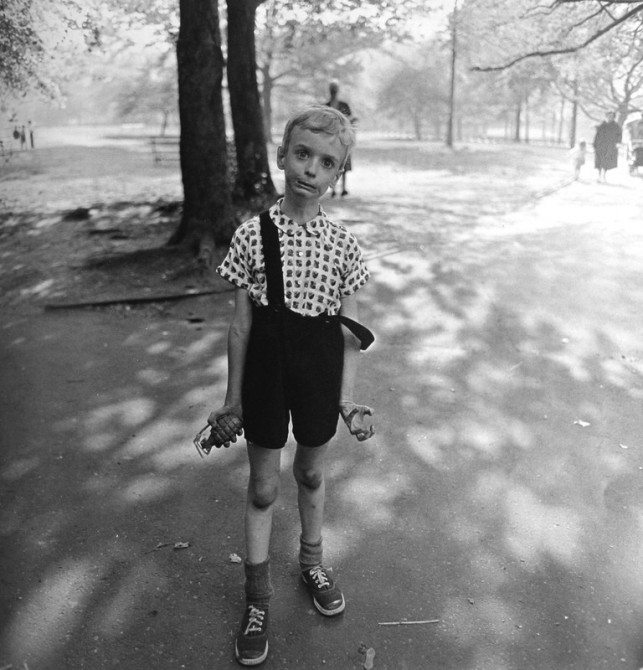
             So yes, the body of work the suicide cultivates must necessarily be good, but even then, that label is subject to relative contemporary aesthetic criteria. Being a good poet becomes ancillary to being an influential poet. In the twenty-first century, few people read modernist Hart Crane (Sample), another American suicide poet (deceased 1932), for his work is at times nebulous, insular, and demanding. But he is considered one of the most influential writers of his generation, in the same way Diane Arbus (Sample 1, 2), suicidal photographer of the 1960s New York demimonde, is certainly famous, but few are familiar with her oeuvre aside from a few hallmark images.
             Other poets, like two-time Pulitzer winner Robert Lowell (Sample), a contemporary of Plath, Jarrell, Berryman, and Sexton, chose to resist death, instead “not avoiding injury to others / not avoiding injury to myself,” as his later poem “Dolphin” tells.  What is there to say for a man who refuses what his manic mind insists? Would Master Osman be any less of a miniaturist if he had set down the needle? Why do the arts beg of death as a test of talent? Even while creativity and mental illness are most probably linked, perhaps envious academia promoted this ideology; we, more “sane,” people shall ignore the genius withheld from us until the artist is deprived of his happiness, squanders his sanity, and renounces his life.


The Deepest Kind of Love


The Deepest Kind of Love
            Throughout the novel, I found myself extremely intrigued by Shekure’s character and the reasons behind her actions.  Every time we come to a chapter from Shekure’s perspective, her mind has changed about her future marriage: she likes Black; she believes she is in love with Hasan; she is suspicious of Black as a murderer; she wants to wait for her husband.  As a result of this constant changing, I found it hard to grasp what Shekure’s true motives were for her marriage.  By piecing together clues from the other characters’ perspectives, I have come to believe that Shekure is acting with her children’s interests put before her own.
            The perspective that served best to clear my confusion when it came to Shekure was Esther.  When Shekure flees her home with Black to cower back under the cover of Hasan, Esther comes to the realization that Shekure’s, “problem wasn’t finding a husband she could love, her challenge was to find a father who would love these boys” (345).  At first I thought nothing of this epiphany because Shekure had admitted to having a growing love for Hasan and a growing distaste for Black.  Therefore, I thought that Shekure fleeing to her former home was just a method to get closer to Hasan.  However, I began to rethink this when Shekure explained her actions and said, “It’s all because of Shevket…. My children had been separated! What kind of mother could remain apart from her child?” (344).  If Esther’s conclusion was correct, this would explain why Shekure changed her mind between Hasan and Black so frequently; it was not Shekure’s love deciding her actions but what emotions she observed from her children.  If Black were to make a mistake with Shevket, she would remember how he loved Hasan and vice versa.  This caused me to reevaluate Shekure’s actions throughout the novel.
From the very beginning of the novel, Black makes constant references to Shekure’s children and that through his marriage, he would become a father to them.  He understands that in order to marry Shekure, he must first win the approval of her children.  For example, when Shekure asks Black to explain his actions with Shevket, he states, “To boast, and to impress a child whose mother I love” (150).  Shekure tests Black as he visits his Enishte to develop an idea of what kind of father Black would be to Shevket and Orhan.  She sends her children in to serve the men coffee so that she, “could observe the man who might soon become their father” (115).  Shekure does not test Black to see what kind of husband he would be to her, but rather if he could get along well with her children.  Furthermore, when Black and Shekure are arranging their marriage, she does not ask if he loves her, but if he loves her children.  Shekure is not satisfied with a simple yes, but inquires further asking, “Tell me, what is it about them that you love?” (151).  By asking this question, Shekure wants Black to give details and prove his answer is genuine.
When Shekure agreed to marry Black, I was under the impression it was because she realized she had a deep love for him.  However, after taking a second look at her actions throughout the novel, I realized that Shekure’s interests were the last thing on her mind.  Shekure even admits this herself when Black confronts her about her lack of love.  To this she replies, “I had to marry you.  If I could love you, I would’ve loved you when I was a child” (294).  The reason that Shekure changes her mind so frequently is because she makes her decisions based on the safety and well-being of her children, not because of her emotions.
            

Sunday, January 27, 2013

The Call for Cautious Readers


           From the beginning of My Name Is Red, we are presented with a world in which the people we encounter are very aware that they are characters in a novel. Elegant Effendi, the victim in “I Am a Corpse,” first presents the meta-fictional aspect of the novel, and sets the stage with the sentiment, “the staggering power of such a book arises from the impossibility of its being depicted” (6). While this is a novel centered on miniaturists illustrating a secret text, questions about literature are raised. This, along with the shifting narration style, may be one of the reasons that Pamuk was awarded the Nobel Prize; the novel functions as a call to demand more of oneself as a reader.
            One of the issues Pamuk raises is the reliability of the narrator. Through his shifting point of view, the reader gains different perspectives through multiple narrators. Because these people are largely aware that they are characters, the text interacts with the reader in a way that most novels won’t. We have to wonder which characters are trying to color themselves in a positive way, and which are more reliable. Shekure, for example, can’t be trusted because she often deals in lies, and even omits details “for fear that you’ll [the reader] dislike [her] father and [herself]” (40). Her story further demonstrates the power of narration, and its ability to appear true. The lies that Shekure generates turn into gossip, and when they get back to her, she’s admittedly “the first to believe the good news” (44), cautioning us, as readers, to avoid taking from a novel that which we want to hear, rather than the truth.
            The novel also seems to be questioning the New Criticism approach to understanding literature. Black is told by Nuri the Miniaturist that “the identity of the miniaturist is not important,” because the art should be understood and appreciated through its own beauty. The New Critics would agree because they don’t believe that readers need to consider the author or culture that produces a work; the text is its own world. While this idea has merit, it seems impossible that we should ignore the circumstances that create a work of literature, or art. However, Pamuk does not seem to dismiss New Criticism completely because the idea of miniaturists creating illustrations to go alongside a story presents its problems, too. The miniaturists’ drawings would no doubt be shaded with their own perspectives and opinions, and if the reader is getting those as well, the painting isn’t an extension, but something in its own right (26). Pamuk makes us aware that we need to be careful in letting personal experience influence interpretation.
            Overall, the metafiction in My Name Is Red seems to suggest the need for a wary and questioning reader as well as a balance between reading the world of the text and the world that shaped its production.